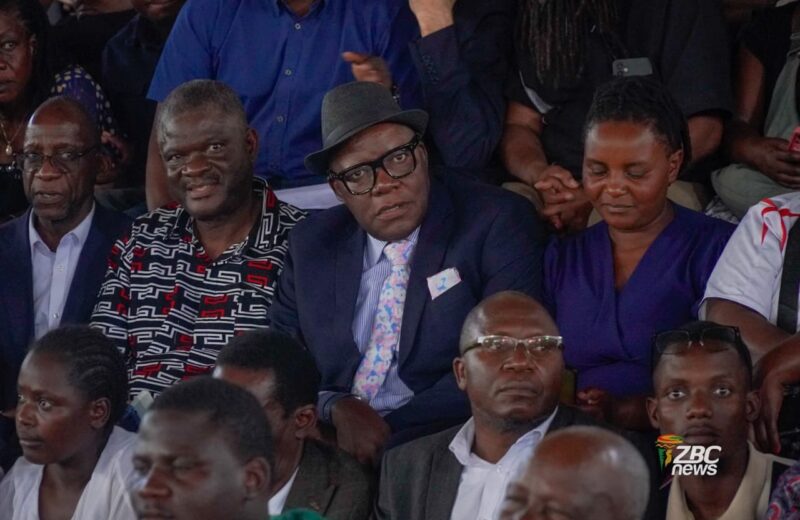


The Zimbabwean government has finally broken its silence to explain exactly why President Emmerson Mnangagwa rejected a massive US$367 million (approximately R6.8 billion) health funding package from the United States—money that was bankrolling lifesaving HIV, TB, and malaria treatment for millions of vulnerable citizens.
For many Zimbabweans waking up to the news that American-funded health programs are grinding to a halt, the obvious question is: why would any government turn away that kind of cash when hospitals are struggling and patients desperately need medicine?
Government spokesman Nick Mangwana, the Secretary for Information, Publicity and Broadcasting Services, released a detailed statement on February 25, 2026, clarifying that the decision followed a direct presidential directive contained in a leaked internal government communication dated December 23, 2025. The correspondence between the Secretary for Foreign Affairs and International Trade, the Secretary for Health and Child Care, and the Secretary for Finance, Economic Development and Investment Promotion instructed that negotiations on the proposed health funding Memorandum of Understanding (MoU) be immediately terminated.
Mangwana insisted the move was not taken lightly but was necessary to protect Zimbabwe’s sovereignty and long-term health security.
“As the government responsible for the welfare of our citizens and the stewardship of our nation’s future, it is incumbent upon us to provide clarity on the rationale behind this decision—a decision that has been characterised in some quarters as controversial, but which we maintain was necessary, principled, and entirely consistent with our sovereign rights as an independent nation.”
He stressed that Zimbabwe values its longstanding bilateral relationship with the United States and recognises the historical contributions of American health assistance, particularly through PEPFAR and other programmes.
“However, a partnership, by its very definition, must be built on a foundation of mutual respect, transparency, and reciprocal benefit. It was the President’s considered assessment, following rigorous inter-ministerial review, that the draft MoU presented for consideration did not meet these fundamental criteria.”
What Exactly Was In The Fine Print That Made Zimbabwe Reject The Money?
This is the question on everyone’s lips. If the money was for HIV treatment, TB control, and malaria prevention—things Zimbabwe clearly needs—what could possibly be so objectionable?
Mangwana revealed that the proposed agreement came with strings attached that went far beyond simply receiving funds for medicine.
“The proposed agreement offered substantial health funding—reported to be in the region of US$328 million—in exchange for comprehensive access to Zimbabwe’s sensitive health data, including pathogen samples and epidemiological information from our citizens.”
He explained that while the offer of assistance was acknowledged, the structure of the agreement raised profound concerns regarding sovereignty and fairness.
“At its core, the arrangement was asymmetrical. Zimbabwe was being asked to share its biological resources and data over an extended period, with no corresponding guarantee of access to any medical innovations—such as vaccines, diagnostics, or treatments—that might result from that shared data. In essence, our nation would provide the raw materials for scientific discovery without any assurance that the end products would be accessible to our people should a future health crisis emerge.”
Mangwana pointed out that the United States was not offering reciprocal sharing of its own epidemiological data with Zimbabwean health authorities. He framed this as a matter of protecting the long-term health security of Zimbabweans rather than merely accepting short-term assistance.
But Didn’t Other African Countries Sign Similar Deals? Why Is Zimbabwe Different?
This is a fair question. The US Embassy in Zimbabwe confirmed that sixteen African nations have already signed similar health collaboration MOUs under the America First Global Health Strategy, unlocking a staggering US$18.3 billion (approximately R339 trillion) in new health funding—including US$11.2 billion in US assistance alongside US$7.1 billion in co-investment from recipient countries.
So why did Zimbabwe walk away while others lined up to sign?
Mangwana explained that Zimbabwe also objected to entering into a bilateral health agreement that would bypass the multilateral frameworks the country has championed on the African continent. The government spokesman highlighted that the United States’ concurrent withdrawal from the World Health Organisation (WHO) and its pursuit of bilateral health agreements with individual nations represents a departure from the multilateral systems carefully constructed to ensure equitable pandemic preparedness.
“At recent WHO negotiations, Zimbabwe had the honour of speaking on behalf of 50 African member states in insisting that pathogen data with pandemic potential be shared exclusively through the WHO’s multilateral system—specifically the Pathogen Access and Benefit-Sharing (PABS) framework.”
Mangwana explained that this system is designed to ensure that when a country contributes its data, the benefits—including vaccines and treatments—are shared equitably, not commercialised exclusively by those with the resources to develop them.
“To accept a bilateral arrangement that bypasses this multilateral mechanism would undermine the very solidarity that African nations have been advocating for on the global stage. Our decision, therefore, is consistent with our continental commitment to ensuring that Africa is not merely a source of biological material but an equal beneficiary of global health innovations.”
He also noted that Zimbabwe is not alone in its reservations.
“Several other African nations have expressed reservations about these agreements, and in at least one instance, a country’s judiciary has intervened to halt implementation pending further scrutiny. This growing continental reflection should not be misconstrued as anti-American sentiment. On the contrary, it is a sign of Africa’s maturation as a geopolitical actor, one that seeks partnerships based on equality rather than patronage.”
What Happens Now To The 1.2 Million People On HIV Treatment?
This is the most urgent question for ordinary Zimbabweans. The US Embassy has confirmed it is now winding down health assistance. Ambassador Pamela Tremont stated that the MoU would have provided US$367 million over five years to support Zimbabwe’s priority health programs.
“We will now turn to the difficult and regrettable task of winding down our health assistance in Zimbabwe. This MoU would have provided $367 million over five years to support Zimbabwe’s priority health programs, including HIV/AIDS treatment and prevention, tuberculosis, malaria, maternal and child health, and disease outbreak preparedness.”
Tremont revealed the scale of what is at stake.
“The Government of Zimbabwe has assured us it is prepared to sustain the fight against HIV/AIDS, and we wish them well.”
Since 2006, the United States has provided more than US$1.9 billion (approximately R35.2 billion) in health support to Zimbabwe, with American-funded programmes directly credited for helping Zimbabwe achieve the UNAIDS 95-95-95 targets—the global benchmark for HIV treatment and suppression.
Does Zimbabwe Have A Plan To Replace This Money?
Health and Child Care Minister Douglas Mombeshora has since announced the government is fast-tracking the National Health Insurance Scheme to safeguard essential health services following the funding cuts. He described the withdrawal as a wake-up call for Zimbabwe to strengthen domestic resource mobilisation.
“Zimbabwe has strengthened predictable domestic resource mobilisation, including through the Aids Levy and earmarked health-related taxes, which provide funding for priority programmes. To enhance financial protection, Zimbabwe is fast-tracking the National Health Insurance Scheme.”
Mombeshora’s statement points to existing funding streams that Zimbabwe already uses. The Aids Levy, for example, is a 3% tax on taxable income for employed persons and a 3% tax on profits for companies, which has been funding HIV and AIDS programmes since 1999.
Tuberculosis remains one of Zimbabwe’s main public health challenges, accounting for over 200 cases per 100,000 people. Malaria outbreaks also continue to threaten vulnerable communities, particularly during the rainy season. The move comes as Zimbabwe faces declining external support following major cuts to United States development assistance, with USAID-funded programmes that supported rural clinics, health worker training, and medical equipment procurement now suspended.
President Mnangagwa himself conducted unannounced visits to major public hospitals in Harare last year, touring Parirenyatwa Hospital and Sally Mugabe Central Hospital, where he observed infrastructure problems and shortages of essential drugs and equipment.
Was This About Minerals Too? What Else Was In The Agreement?
Government sources indicated that Harare also objected fiercely to provisions linked to access to Zimbabwe’s critical mineral resources—a move advisors feared would give Washington strategic leverage over sectors central to the nation’s future economic independence. While the government statement focused on health data and sovereignty, sources suggest the mineral clauses were a significant red flag for officials who saw them as a backdoor attempt to gain economic control.
Mangwana was emphatic that no foreign assistance, regardless of its monetary value, should compromise the sovereignty and independence of Zimbabwe as a nation. He framed the rejection as a matter of constitutional duty.
“Our constitutional mandate requires us to safeguard our citizens’ data, our biological resources, and our national decision-making autonomy. Development aid should empower nations, not create dependencies or serve as a vehicle for strategic extraction. When financial assistance is contingent upon concessions that touch upon national security, data sovereignty, or access to strategic resources, it fundamentally alters the nature of the relationship from one of partnership to one of unequal exchange. This we cannot accept, and this we believe any self-respecting sovereign nation would also reject.”
Despite the government’s explanations and assurances, questions remain over where replacement funding will be sourced for the 1.2 million HIV patients, thousands of TB sufferers, and communities at risk of malaria who now face an uncertain future as American programmes grind to a halt.
Flipcash is Your Trusted PayPal & Crypto Exchange Partner in Zimbabwe — WhatsApp +263 77 163 9263
The post Zimbabwe Explains Why It Rejected US$367M US Health Funding For Lifesaving HIV, TB, And Malaria Programs appeared first on iHarare News.