

Ministry Of Education Outlines Procedures For Reporting ‘Corrupt’ Teachers And School Officials
The Ministry of Primary and Secondary Education has moved to spell out clear steps parents can follow to report what it describes as “corruption” by teachers and school officials, including the charging of extra lessons and forcing parents to buy uniforms at specific schools.
The ministry says parents should not suffer in silence. It insists there are structured reporting channels, from the classroom level right up to head office, and ultimately the courts, if complaints are not resolved.
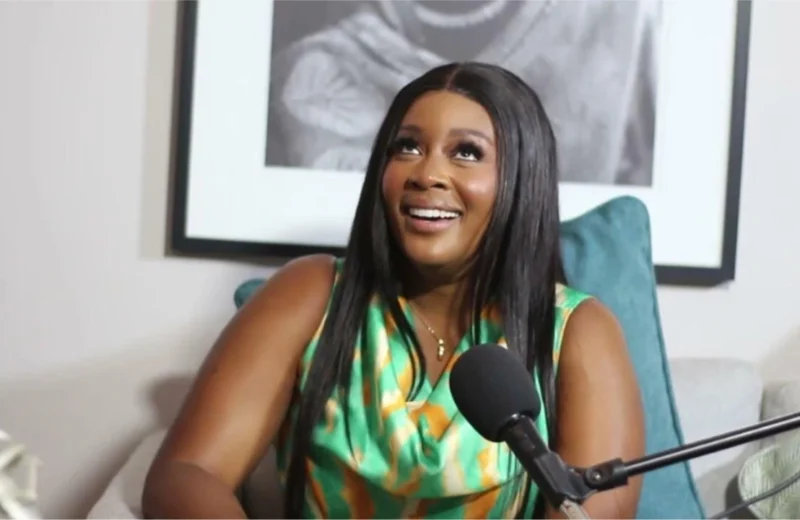
The clarification was made by the ministry’s Director of Communications and Advocacy, Taungana Ndoro, as concerns grow among parents about alleged corrupt practices in public schools.
Extra Lessons Described As Corruption
Ndoro said teachers who demand payment for extra lessons are abusing public office.
“This is corruption in public office. The office of a teacher is the classroom. If that teacher is in that classroom and uses the power and authority within him or her to abuse that platform, to say, ‘parent, give me money so that I can teach your child,’ a job which you are already being paid for by government, then you are corrupt and you are supposed to be put to task.”
Parents have complained that some schools have turned extra lessons into informal “pay-to-learn” schemes, with learners allegedly threatened with neglect if fees are not paid.
Ndoro said parents must start by asking questions at the lowest level.
“The reporting mechanism or complaints handling in the ministry, if you are a parent and feel something is amiss at the school, the first port of call, depending on the magnitude, is the class teacher.”
He said parents are entitled to question charges such as US$10 (about R190) or US$20 (about R380) per week or per month.
“You ask the teacher, and the teacher has to respond to you, and that response becomes the basis for further complaints.”
How Complaints Should Be Escalated
If the issue is not resolved, Ndoro said parents must escalate the matter to the school head.
“The head represents the permanent secretary, the minister, and in some cases even the President. When something happens at a school, we go straight to the head and ask, ‘What happened?’ because accountability starts there.”
He acknowledged that some parents fear victimisation of their children if they complain.
Ndoro admitted there are weaknesses in the system.
“We have challenges where some district school inspectors work hand-in-hand in cahoots with some heads of schools.”
In such cases, he said parents should report to provincial offices, which he described as more independent, before taking matters to head office.
“If that fails, because it does fail at times, that’s when you come to the head office. The permanent secretary, normally, is the final decision maker.”
Ndoro said parents still have the right to take the ministry to court if they remain dissatisfied.
Uniforms And Other Charges Also Flagged
Beyond extra lessons, Ndoro said forcing parents to buy uniforms from a school is unlawful in public institutions.
“The minister announced it on television: no school is allowed to force parents to buy uniforms at that school.”
He said parents are free to buy uniforms anywhere, provided colour codes are followed.
“If a blazer is US$35 (about R665) in the market and US$45 (about R855) at school, parents will go to the market. You don’t need to force them.”
Ndoro urged parents to use official channels to report abuses, saying silence only allows problems to persist.
The remarks were first published by CITE.
Flipcash is Your Trusted PayPal & Crypto Exchange Partner in Zimbabwe — WhatsApp +263 77 163 9263
The post Ministry Of Education Explains How Parents Can Report ‘Corrupt’ Teachers And School Officials appeared first on iHarare News.